


Healthy turf doesn’t happen by accident. Or a spark of luck. Or a few magic beans. It happens by consistency and knowledge. Despite what everyone might try to make you believe, you don’t have to be an expert to start. All you must understand are the lawn care basics.
At TS Landscaping LLC, we’ve helped homeowners and business owners in Roanoke, VA, transform their once-forgotten yards into outdoor oases. More than a simple guide to lawn care, this blog covers all the steps and tips you must learn to begin your landscape maintenance with confidence. Whether you’re caring for tall fescue, Kentucky bluegrass, or a warm-season lawn like zoysiagrass or bermuda, we will set you up for success.

1. Adjust Your Schedule Seasonally
Grass grows on a schedule, not a stopwatch. One of the top basic lawn care tips we can provide is exactly that: adapting your plan to the season and to your grass type. In Roanoke’s transition zone, cool-season grasses (especially tall fescue blends) grow strongest in spring and fall. On the other hand, warm-season grasses (zoysia and bermudagrass) hit their stride in the heat of summer.
That means the most active tasks in your care routine will vary by season. For example, in spring, you should focus on cleanup, gentle feeding, and checking irrigation. In summer, you must prioritize consistent mowing and smart watering. In fall, overseed cool-season lawn grasses and address soil health. And winter is the time for equipment maintenance and planning.
2. Test Your Soil
Soil is the foundation of a beautiful lawn. Therefore, testing your soil is one of the best lawn care basics. A test gives you all the insight (pH and nutrient levels) you need to understand what your landscape requires to thrive. Let’s take Roanoke as an example again: the region is known for clay-heavy soils that become compacted easily, which affects drainage and root growth. Testing helps you choose the right amendments for your type of soil, like lime to balance a low pH and compost to improve structure.
We recommend sending a sample to a reputable lab or picking up a home test kit. Follow the recommendations for pH adjustment and nutrient corrections. Small changes (such as adding organic matter and balancing pH) can make a huge difference in soil health. So think of testing as an annual checkup that guarantees a resilient lawn.

3. Understand Watering
Proper watering is the key to healthy grass, but many residents fail at it, inadvertently causing most of their lawn problems. Because overwatering drowns the roots and invites diseases, and underwatering stresses the turf, you must aim for balance. One of our lawn care tips for beginners is precisely that: water less often; however, do it deeply, so moisture reaches the root zone. We recommend early morning, since the wind is calmer, temperatures are cooler, and less water evaporates.
In Roanoke summers, watch for signs your lawn needs a drink: lingering footprints, a duller color, or leaf blades folding. Adjust sprinklers to avoid runoff on slopes and correct mis-aimed heads that spray sidewalks or driveways. If you have new seeding or a thin lawn patch you’re trying to thicken, water lightly and more often just until germination and establishment, then transition to deeper, less frequent watering.
4. Choose the Right Fertilizer
Fertilizer is one of the lawn care basics most people get wrong. Contrary to popular belief, fertilizer is not a one-size-fits-all product. For a healthy lawn, we recommend choosing a fertilizer based on your soil test and turfgrass type, and matching the timing to your grass’s growth pattern. Cool-season lawns (tall fescue, bentgrass, etc.) respond best in early and late fall. Warm-season lawns (centipedegrass, bahiagrass) prefer feeding in late spring and again in mid-summer.
Look for slow-release formulations for steady growth and fewer surges. If you’re new to lawn care, start light. Underfeeding is easier to correct than overfeeding. The right product, at the right rate, at the right time, will always outperform a heavy-handed approach.
5. Begin Mowing at the Perfect Height
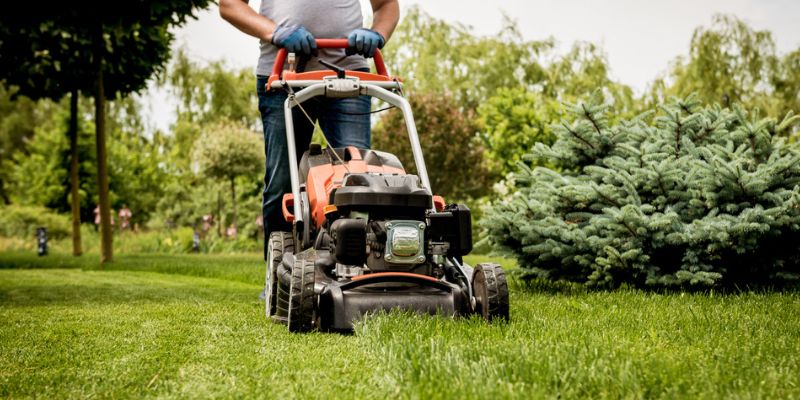
Mowing at the perfect height is one of the basics of lawn care that you must always get right. It’s more than chopping away grass. It sets the tone for the entire landscape. So we suggest keeping your blades sharp and setting your mower deck to the correct height.
For cool-season lawns, that is 3–4 inches to help shade the soil, prevent drought, and crowd out weeds. Warm-season lawns typically prefer a lower cut, but avoid scalping. Instead, maintain a height that encourages dense, even growth.
Follow the one-third rule: never remove more than one-third of the grass blade in a single mowing. During peak growth, that might mean mowing weekly, while in slower periods, you can stretch the schedule. Also, you should alternate your mowing pattern to prevent ruts and encourage upright growth. If grass clippings aren’t clumping, leave them; they become mulch and improve soil fertility.
6. Implement Proper Weed Control
Weeds are symptoms, not just problems. A thick, green lawn is your first line of defense. Start with good practices (keeping mower blades sharp, watering deeply, feeding at the right time, and more). For extra protection, use a pre-emergent herbicide in early spring to stop lawn weeds before they sprout. If they still appear, spot-treat rather than blanket-spraying the entire landscape.
Identify the most common types of weeds in your area, as each responds best to specific products and timing. For example, attack broadleaf weeds like dandelion and clover in fall, and grassy weeds like crabgrass in early spring before they germinate. After control, focus on filling bare lawn spots with seed so weeds don’t return.

7. Use the Ideal Tools
The perfect tools are also lawn care basics. Truth be told, they just make the entire process faster, cleaner, and easier. Start with the right lawn mower and sharp blades. Add a string trimmer for tight edges and for trimming around obstacles, and a blower for a tidy finish. A quality hose or irrigation system, a hand spreader for seed and fertilizer, and a sturdy rake belong in every beginner’s kit.
For Roanoke’s compact-prone soils, consider renting or scheduling core aeration equipment in fall for cool-season lawns or in late spring for warm-season grasses. If you’re not ready to invest in tools you’ll only use once or twice a year, that’s where we come in. TS Landscaping LLC can handle specialized tasks so you can focus on the rest of your year-round lawn care plan.
8. Apply Grass Seed at the Right Season
Seeding at the wrong time is a waste of effort. In Roanoke, overseed tall fescue and Kentucky bluegrass in early fall, when the soil is warm and rainfall is regular. This window gives new grass the time to establish strong roots before winter. For warm-season lawns, tackle seeding in late spring or early summer when soil temperatures support growth.
Prep is everything: mow a bit lower, rake away debris, loosen the topsoil, and spread a quality seed blend suited to your light conditions (full sun, partial shade, or shade). Keep the top layer consistently moist until seedlings establish. Then shift to deeper, less frequent watering. Finish by feeding lightly to support early growth, following guidance from your soil test.

9. Clean and Edge Your Lawn
Of course, lawn care basics couldn’t leave cleaning and edging behind. After all, striking curb appeal depends on the details. Use a string trimmer or another edging tool to define borders and keep grass from creeping where it doesn’t belong. After mowing and trimming, blow dead grass back into the yard rather than leaving it on your hardscaping elements.
Don’t forget seasonal cleanups. Roanoke’s trees shed heavily, and while piles of leaves are fun, they smother the ground and invite disease. Also, keep beds weeded and mulch neat around the trees and shrubs (but not piled against trunks). A few tidy minutes each week make the difference between an average yard and a standout one.
10. Aerate When Necessary
To end our lawn care 101, let’s talk aeration. If your lawn feels spongy or still looks thin after putting in your best efforts, compaction may be the culprit. This is extremely common in clay soils or landscapes with high foot traffic. Core aeration helps. It removes small plugs of soil, allowing air, water, and nutrients to reach the root zone. For cool-season lawns in Roanoke, schedule aeration in early fall; for warm-season lawns, late spring is ideal.
In fact, aeration and overseeding are the perfect pair for cool-season grasses. After pulling cores, spread your seed and brush it lightly into the holes for excellent seed-to-soil contact. Follow with consistent moisture, and you’ll notice thicker, healthier turf in the weeks to come. If that sounds like a lot to coordinate, TS Landscaping LLC offers aeration and overseeding packages that take care of timing and technique for you.
Unsure Where to Start? Hire TS Landscaping LLC for Professional Lawn Care!
Too long; didn’t read? The lawn care basics we always recommend for beginners are creating seasonal schedules, fertilizing, watering, and mowing properly, controlling weeds, testing your soil, seeding and aerating when necessary, cleaning and edging your yard, and using the right tools. Mastering this knowledge ensures a tailored plan for your lawn’s needs.
But if you’re feeling overwhelmed or looking for faster results, TS Landscaping LLC is just a call away. We’re Roanoke’s preferred specialists with an expert eye, ready to design a routine that fits your lifestyle, budget, preferences, and conditions. Whether you need a one-time jumpstart or ongoing maintenance, we’ll meet you where you are and get your grass where you want it. Get in contact with us today for a personalized schedule and tips (as well as a free estimate)!